Physics
Apply NowPhysics at Skyline College
Physics is the study of the nature and properties of matter and energy, including heat, light and radiation, sound electricity, magnetism and the structure of atoms.


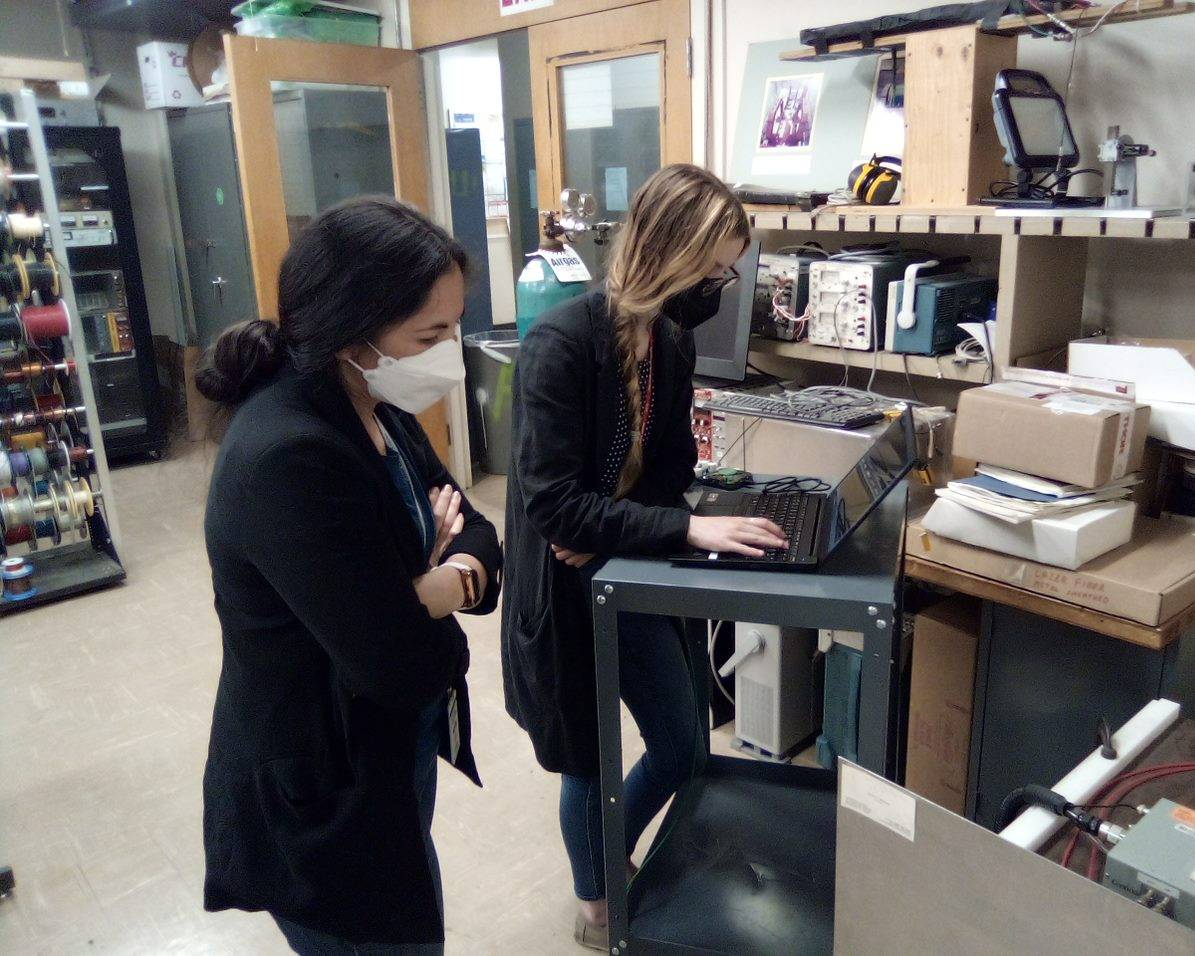
Faculty Highlight
 "Physics falls into the category of hard sciences. It relies on objective observations
and measurements. But at the heart of it is our collective pursuit of a better understanding
of the Universe, a profoundly human endeavor. This is what I try to bring into my
teaching: a rigorous treatment of the material that promotes critical thinking, while
infusing a culture of kindness, empathy and mindfulness in the classroom."
"Physics falls into the category of hard sciences. It relies on objective observations
and measurements. But at the heart of it is our collective pursuit of a better understanding
of the Universe, a profoundly human endeavor. This is what I try to bring into my
teaching: a rigorous treatment of the material that promotes critical thinking, while
infusing a culture of kindness, empathy and mindfulness in the classroom." To succeed in Physics, students will need to display a keen intellectual curiosity that pushes them to ask questions and seek answers about the physical world around them and the universe beyond. Students should have strong critical thinking and analytical skills along with the ability to work independently and as part of a team.
Studying physics offers a unique opportunity to better understand the physical world and the laws that govern it. The Physics Department offers a wide range of courses that fulfill General Education requirements for a variety of majors. The department also offers courses in Astronomy.
We also offer an Associate of Science Degrees in Physics that can help you create a clear path for transfer to a four-year institution. The applications for a degree in physics are broad, including a variety of careers in the sciences and engineering. Many jobs in physics require a Ph.D., so the program at Skyline College is a good launching point for pursuing education at a four-year university.
Physicists spend much of their time working in offices and conducting research in laboratories and observatories. Most physicists work full time. According to the U.S. Department of Labor, Physicists in California make an average of $201,930 per year.
Check out the classes offered in current and upcoming semesters.
Class ScheduleGeneral Education (GE) Courses
Conceptual Physics (PHYS 100) and Conceptual Astronomy (ASTRO 100) are lecture courses intended to give you a first introduction to the study of the natural world. These courses are minimally mathematical. If you need to fulfill a GE laboratory requirement, you may also wish to consider Conceptual Physics Lab (PHYS 101) and/or Conceptual Astronomy Lab (ASTRO 101).
General Physics Sequence
One or both semesters of the general physics sequence (PHYS 210-220) are required of many life science majors, including most pre-health fields. Both courses have lecture and lab components which must be taken concurrently.
Entry into this sequence does not require any previous physics experience, but you must be proficient with algebra and trigonometry (pre-requisite of MATH 130 or equivalent.) As optional extra preparation for PHYS 210 (and/or to fulfill a GE requirement), you may wish to take PHYS 100 prior to starting this sequence.
If you wish to transfer to specific institutions, you may also be required to take the associated supplemental lectures (PHYS 211-221), which require Calculus (or Applied Calculus) as a pre-requisite.
Calculus Physics Sequence
One, two, or three semesters of the calculus-based physics sequence (PHYS 250-260-270) are required of physical science, engineering, computer science, and physics majors. All courses have lecture and lab components which must be taken concurrently.
Entry into this sequence does not require any previous physics experience, but Calculus must variously be taken as pre- or co-requisites (consult course catalog/schedule for details). If you feel that you may need additional extra preparation, you may wish to consider PHYS 100 or PHYS 210 depending on your comfort level.
Physics Majors
If you are interested in majoring in physics, you should take the Calculus Physics sequence and continue your study of mathematics through the Calculus sequence (MATH 251-252-253), Linear Algebra (MATH 270), and Ordinary Differential Equations (MATH 275) to prepare for post-transfer upper division physics course work. Skyline offers a transfer degree in Physics which can give you a preferential advantage in transferring.
If you are interested in astronomy, you should strongly consider taking ASTRO 100/101 to gauge and confirm your interest in the field, though they are not always pre-requisites for majors courses. If you are interested in studying observational astronomy and/or theoretical astrophysics, you will need to major in physics (see above) and should direct your post-transfer upper division electives towards astronomy-related topics.
| Program | Type | Total Units |
|---|---|---|
| Physics for Transfer 2.0 | AS-T | 60 Units |
The Skyline College STEM Center brings together academic and student support services for students taking science, technology, engineering and math courses.
The center supports student success by ensuring students have access to resources such as academic tutoring, counseling services, a resource depository for STEM pathways and transfer, a hub for internships and work based learning opportunities, as well as a place where students and staff can collaborate and build a community and supportive connection.
Check out the STEM CenterUpon completion of the program students will be able to:
- Demonstrate a basic level of scientific literacy in physics, conceptual understanding of fundamental physics principles, awareness of different fields of physics and corresponding job opportunities.
- Apply the scientific method, qualitative and quantitative reasoning, advanced mathematical and numerical techniques to find solutions to problems relevant to their future careers and current events.
- Collaborate as part of a team to conduct lab experiments, measure real-world physical behavior, interpret experimental data using modern statistical tools, and communicate their findings effectively.
- Critically evaluate the treatment of physics in media and public policy, and demonstrate a basic understanding of how to engage in physics in an ethical and socially responsible way.
Location: STEM Division Office Building 7, Room 7-130
Phone: (650) 738-4221
What is nEXO?

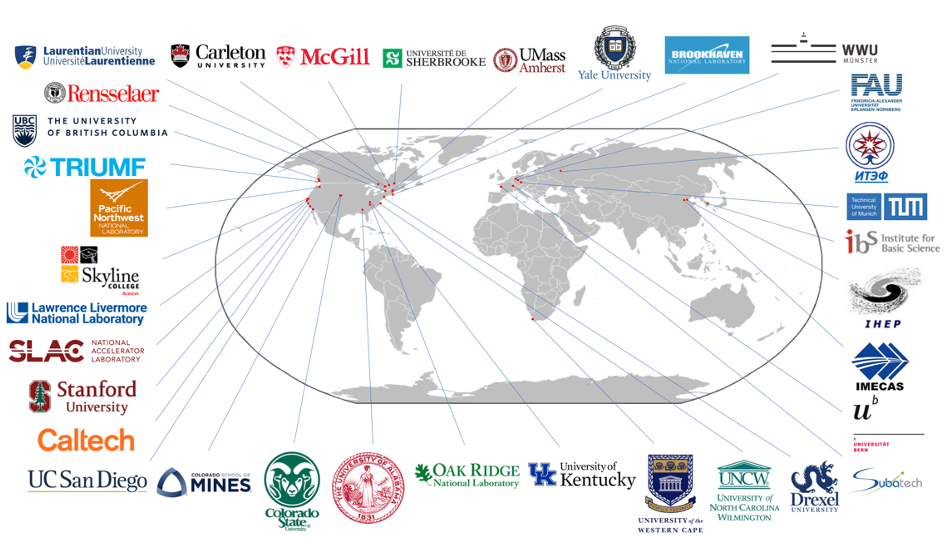
nEXO is an international nuclear physics experiment for detecting a special kind of radioactivity that has been theorized but never detected. If discovered it would answer many long-standing open questions about why the universe is how it is and how it came to be, and it could also offer some very important clues about the nature of dark matter.
If you would like more information about nEXO, you can visit the public website.
What does nEXO have to do with Skyline?
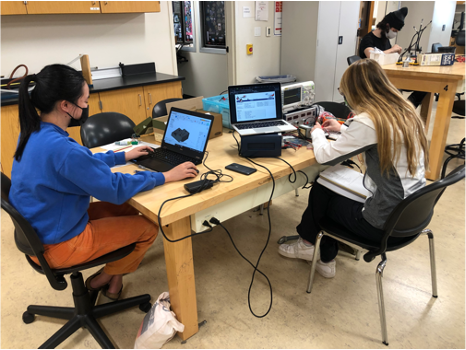
Skyline College Physics received a grant from the US Dept of Energy to fund paid student traineeships for SMCCD students to participate in the R&D for the nEXO detector. This detector is an extremely complex instrument that is still under development, and will take years to design and build-- in fact, some of the technology it requires doesn't yet exist and still needs to be invented! The funding for this program has ended in August 2025. For more information check out the technical report for Pathways to Improved Representation in Advanced NucleAr science (PIRANA).
If you have any questions, please contact Emilie Hein (heine@smccd.edu) and Marco Wehrfritz (wehrfritzm@smccd.edu).
Physics Jam is a FREE one-week intensive, fun and stimulating physics preparation program designed to:
- Prepare students for upcoming physics courses
- Train students to study and understand physics
- Familiarize students with understanding and analyzing physics word problems
- Build confidence in areas such as decomposing vectors, data analyzing, and use of trigonometry in physics
- Develop group study skills and connect with community of support
Primary Contact
Lab Coordinator
Department Faculty
More details »
More details »
More details »
Division Assistant & Dean